正保二年 · 1645
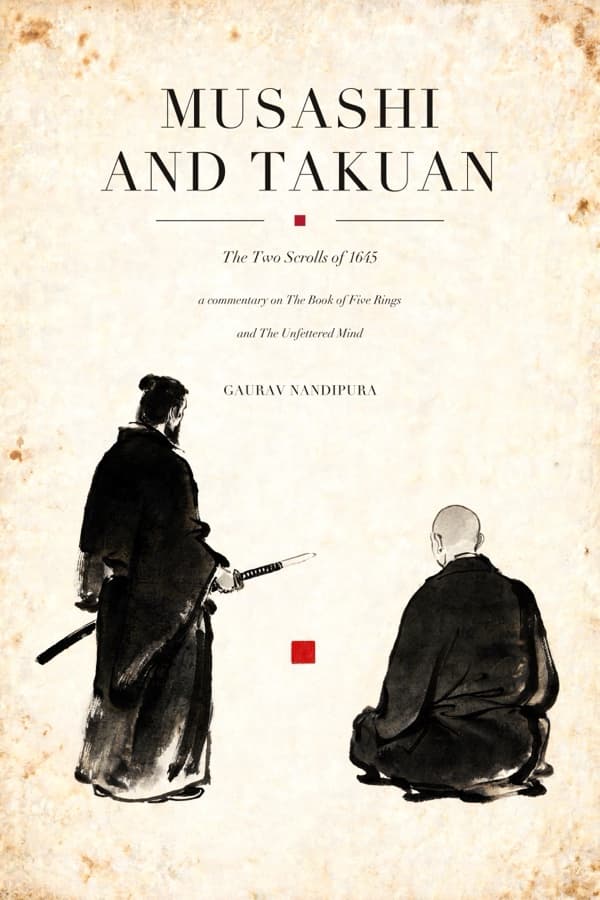
Musashi and Takuan
The Two Scrolls of 1645
a commentary on The Book of Five Rings and The Unfettered Mind, and the lost architecture of the warrior mind
Gaurav Nandipura · Dark Kinetics
- pages
- 369
- chapters
- 64
- plates
- 29
- codes
- 10
pages
chapters
plates
codes
Two men died in Japan in 1645. One had spent his life with a sword and wrote five scrolls about the body. The other was a Zen priest who had been exiled by a shōgun, and wrote a private letter about the mind.
They never met. No line connects them. And their two texts describe the same architecture from opposite ends.
五輪書 Go Rin No Sho was finished in a cave above Kumamoto in the fifth month of Shōhō 2, and Miyamoto Musashi died within weeks of setting down the brush. 不動智神妙録 Fudōchi Shinmyōroku was written fifteen years earlier by Takuan Sōhō to Yagyū Munenori, sword instructor to the shōgun, and was never meant for publication at all.
Almost nobody reads them together. This is a commentary on both, in full, assuming you have read neither.
It is also an argument with them. The oldest account of Musashi's life is a memorial stone raised by his adopted son in 1654; most of what the world believes comes from a newspaper serial published in 1935. The Fire scroll contains four documented methods for degrading another person's attention. Applied at Ichijō-ji, the doctrine killed a child. A commentary that gives you the austerity and leaves out the boy is selling a samurai who did not exist.
Editions
What is in it
- Sixty-four chaptersacross five parts, with six appendices, a chronology, a glossary of Japanese terms and a pronunciation guide.
- Every named section of all five scrolls— the thirty strikes of Water, the twenty-seven methods of Fire, and Wind's nine charges against every other school of swordsmanship, one at a time.
- The letter in full— 無心 mushin, the immovable mind, where to place attention, the three stages, and the spark-stone interval.
- The Dokkōdō, all twenty-one precepts of the Way of Walking Alone, written a week before his death.
- The third document — Yagyū Munenori's 兵法家伝書 Heihō Kadensho, the complete one, the one nobody reads.
- What the twentieth century did with all of it, including the wartime editions, and why bushidō as most people receive it is a modern invention.
No existing English translation is quoted anywhere in this volume. Every Japanese passage is rendered from the sense of the original.
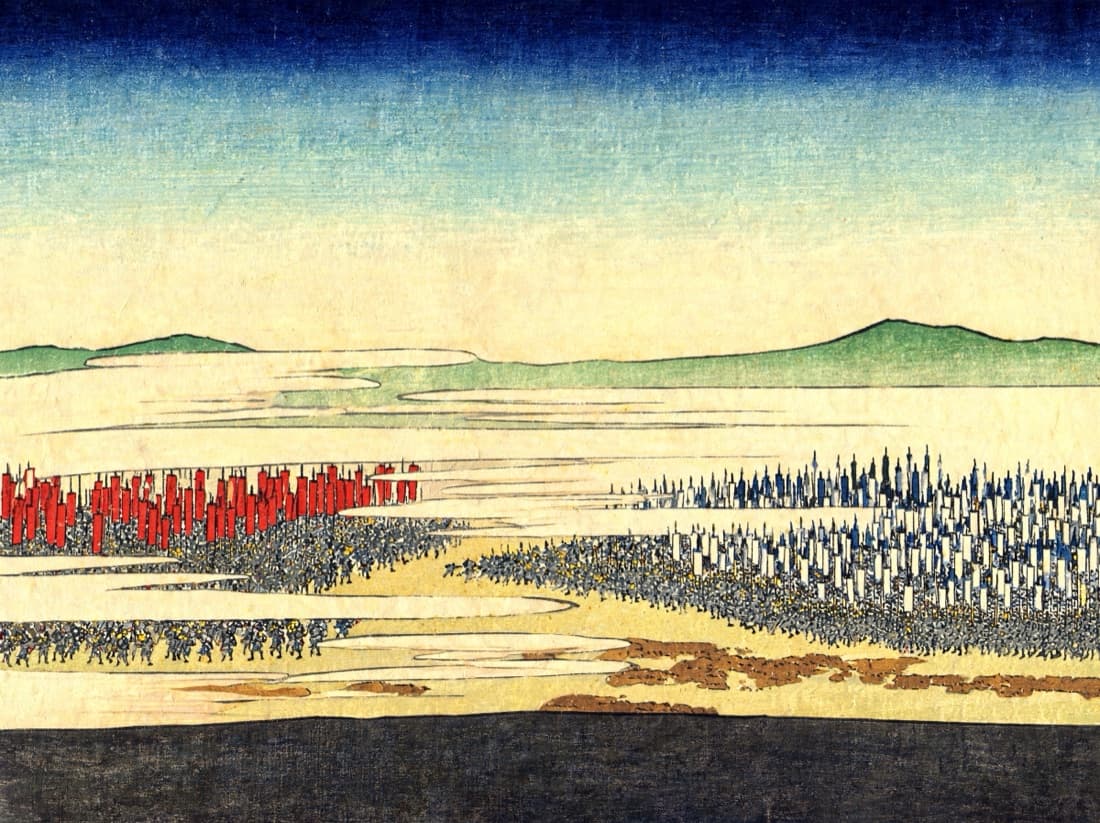
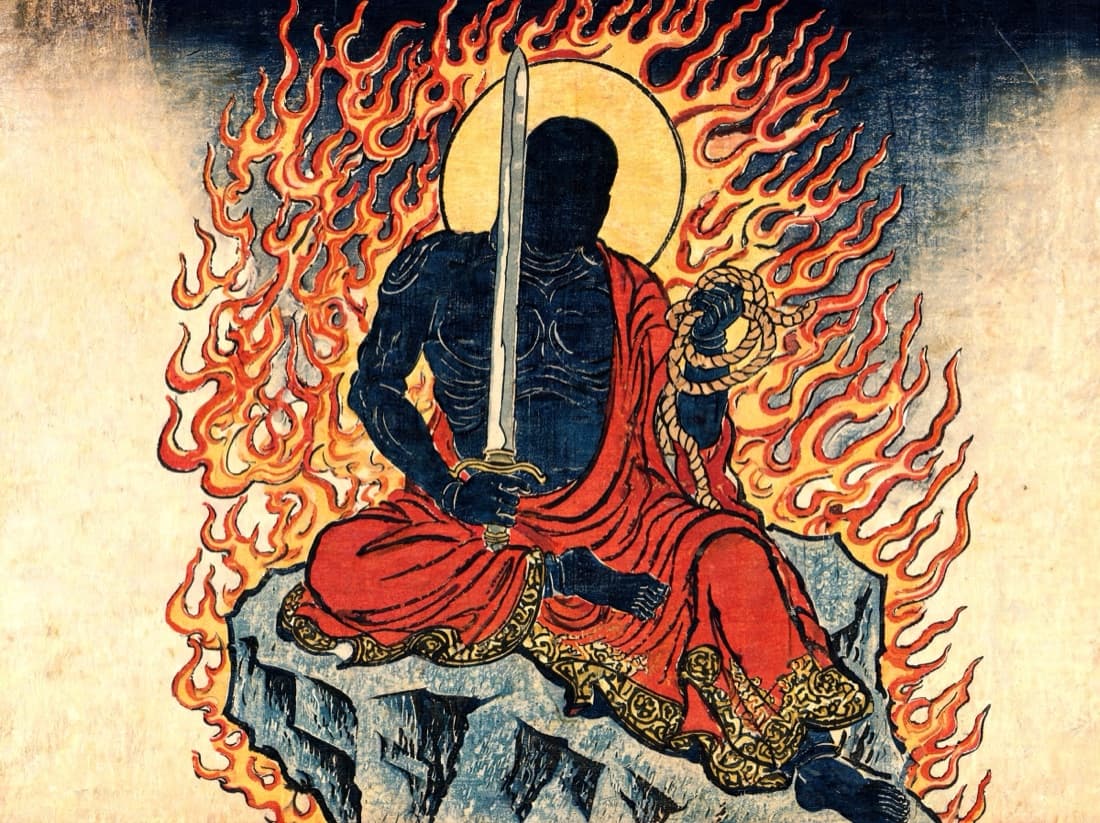
Twenty-nine plates
In the ukiyo-e woodblock tradition, printed full colour throughout. Every competing edition of this material ships black and white.

Ten codes
Ten pages in the book carry a code. Each opens onto material that continues past the page — the cave and how to reach it, the monument and what it actually says, every named section of all five scrolls, the twenty-one precepts unbroken. They can be rewritten for as long as the book is in print, and the code in your copy will keep pointing at them.
One letter, sent rarely. The doctrine as it is written, and nothing else. No launch sequence, no countdown.
Both men are explicit that what they describe takes decades, cannot be transmitted by reading, and looks — when it is finished — exactly like a person who never began.
They wrote it down anyway.
伝書 Denshō — the five scrolls as five kata →