Creatine Monohydrate: The Most Proven Supplement in Sports Science
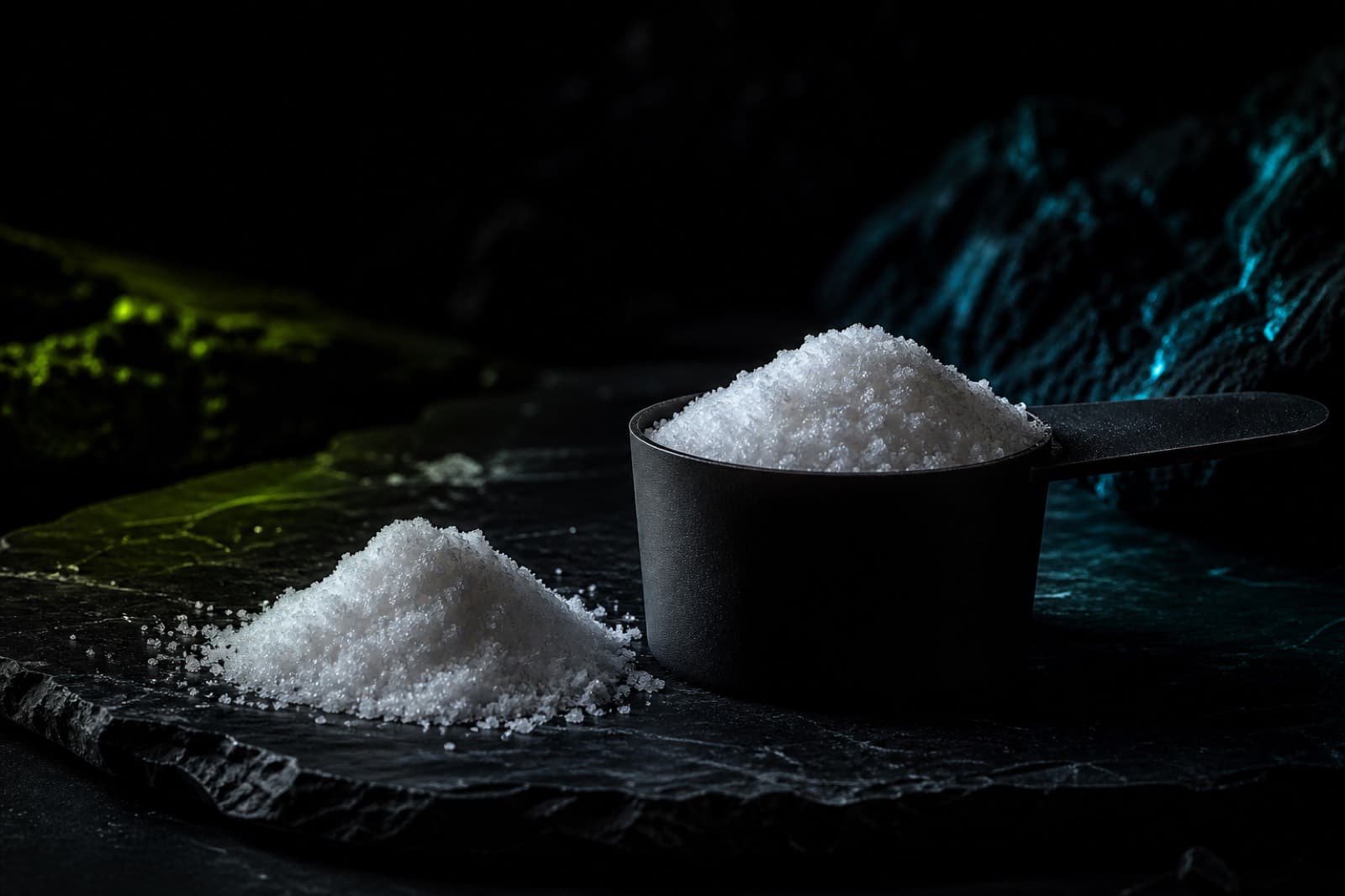
Nutrition
Creatine Monohydrate: The Most Proven Supplement in Sports Science
If you only ever take one supplement, make it creatine monohydrate. Nothing else in sports nutrition comes close for the combination of evidence, safety, and cost. Hundreds of studies, decades of use, and a clear mechanism — this is the rare supplement that actually does what the label says.
This is a practical guide for athletes: what creatine is, what the research really shows, how to dose it, and which myths to ignore.
What Creatine Actually Is
Creatine is a compound your body already makes and stores mostly in muscle, where it helps rapidly regenerate ATP — the energy currency for short, hard efforts. More stored creatine means more fuel for the first few seconds of a sprint, a heavy set, or a jump.
You get some creatine from red meat and fish, but food levels are low. Supplementing simply tops up your muscle stores to their ceiling.
What the Research Shows
The evidence here is unusually strong and consistent:
- The International Society of Sports Nutrition concluded creatine monohydrate is the most effective ergogenic nutritional supplement available for increasing high-intensity exercise capacity and lean body mass (Kreider et al., 2017).
- A meta-analysis found creatine supplementation reliably increases lean mass and improves performance in short-duration, high-intensity efforts (Branch, 2003).
- The same body of work documents a strong long-term safety profile in healthy people.
Bottom line: creatine helps you do slightly more high-quality work — more efforts, more power, more total training stimulus — and that compounds over months.
How to Take It
You do not need anything fancy. Plain creatine monohydrate is the gold standard and the cheapest form.
Monohydrate is cheap enough that adulteration is rare — which makes it the exception rather than the rule in this aisle. Five foods where it is the rule.
- Daily dose: 3-5 g every day, including rest days.
- Loading (optional): ~20 g/day split into 4 doses for 5-7 days saturates muscles faster. Skip it if you dislike the gut discomfort — you reach the same saturation in 3-4 weeks at 3-5 g/day.
- Timing: Largely irrelevant. Consistency beats timing. Many people take it with a daily meal or shake out of habit.
- No need to cycle. Take it continuously.
Buy a product that is third-party tested (NSF Certified for Sport or Informed Sport) so you know what is in the tub.
Myths to Ignore
"Creatine is bad for your kidneys." In healthy individuals, the research does not support this. If you have existing kidney disease, talk to your doctor — that is true of any supplement.
"Creatine makes you fat / bloated." Early weight gain is mostly water drawn into muscle, which is performance-neutral to helpful. It is not fat.
"It causes hair loss." This stems from a single small study on a hormone marker, not actual hair loss, and has not been replicated.
Who Benefits
Almost everyone training hard: strength athletes, sprinters, jumpers, field-sport athletes, and physique-focused lifters. Even older adults benefit for muscle and strength preservation. Responders gain more if their starting muscle creatine is low (common in those who eat little red meat).
How It Fits Your Training
Creatine is a multiplier, not a substitute. It lets you squeeze more quality out of a good program — it cannot fix a bad one. Pair it with progressive load and a real standard to measure against, and the small per-session edge adds up over a block.
For the supplements that pair best with hard training, see our guides on caffeine for performance and omega-3s for recovery.
Next: five substitutions that cost real money, and the check that exposes each — the five counterfeits.
References
- [1]Kreider RB, Kalman DS, Antonio J, et al. “International Society of Sports Nutrition position stand: safety and efficacy of creatine supplementation in exercise, sport, and medicine.” Journal of the International Society of Sports Nutrition, 2017
- [2]Branch JD. “Effect of creatine supplementation on body composition and performance: a meta-analysis.” International Journal of Sport Nutrition and Exercise Metabolism, 2003
Dark Kinetics
The five scrolls Musashi sealed at Reigandō in 1645, restored as a training doctrine and welded to cellular measurement.
Denshō
Earth, Water, Fire, Wind, Void — the doctrine this record sits inside. No consultation, no call to schedule.
OPEN THE DENSHŌ