Beetroot Juice & Dietary Nitrate: The Endurance Edge That Actually Works
Nutrition
Beetroot Juice & Dietary Nitrate: The Endurance Edge That Actually Works
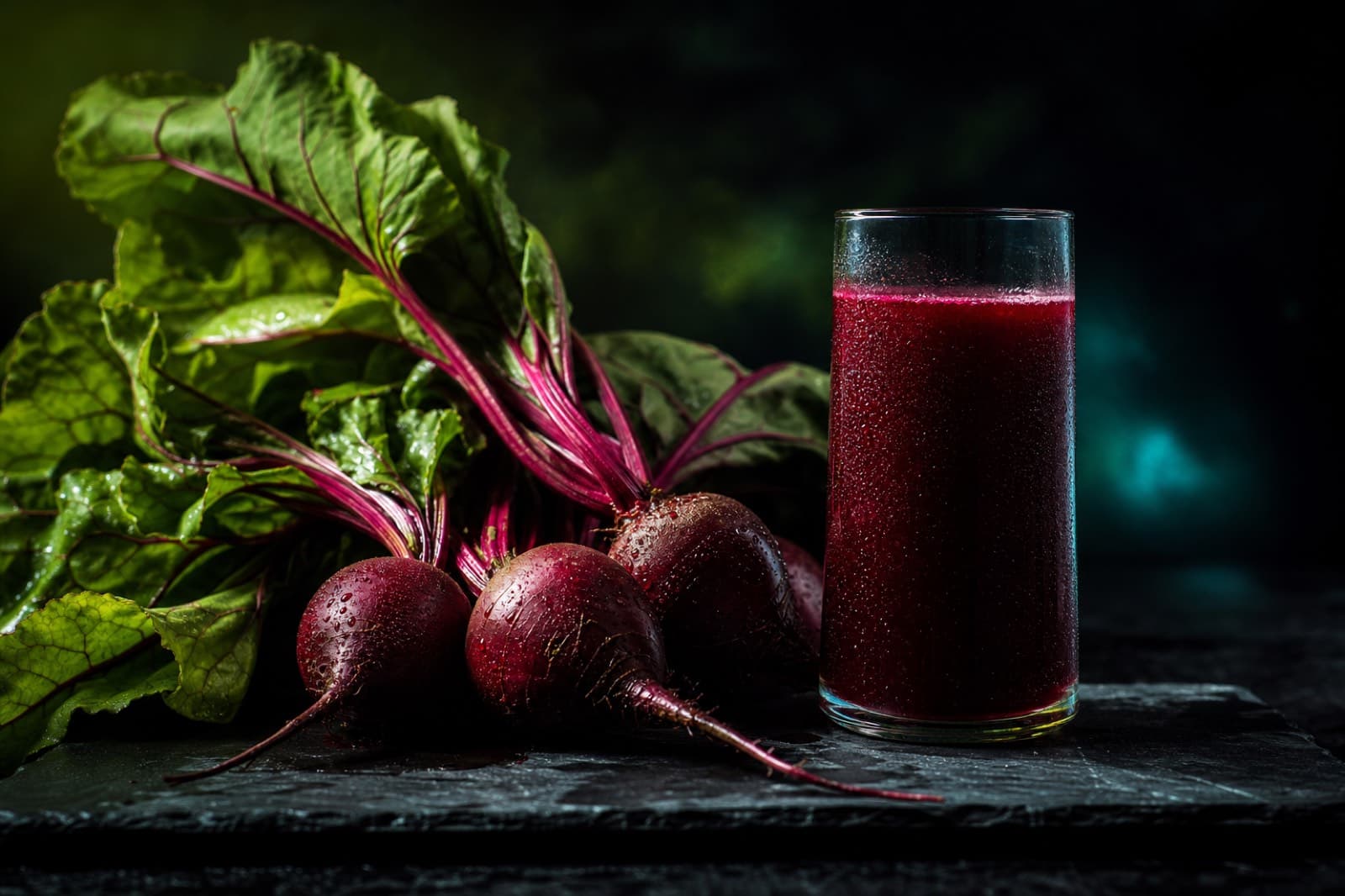
Beetroot juice looks like a wellness fad. It is not. Dietary nitrate is one of the few endurance aids with genuinely strong, repeatable evidence — and it works through a mechanism most supplements can only dream of: it makes your muscles more fuel-efficient.
How Nitrate Works
Beetroot is rich in inorganic nitrate. Once ingested, your body converts nitrate to nitrite, and then — especially when oxygen is low, like during hard exercise — into nitric oxide.
Nitric oxide improves blood flow and, crucially, makes muscle contraction more economical. The result: you use less oxygen to produce the same power output. In endurance terms, that is free efficiency.
What the Research Shows
The evidence here is among the strongest for any endurance supplement:
Nitrate content varies enormously by growing conditions and processing, and no label reports it. The same problem in matcha: shading before harvest drives the colour, and costs the grower a crop.
- A major review concluded dietary nitrate reduces the oxygen cost of submaximal exercise and can enhance exercise tolerance and performance (Jones, 2014).
- A controlled trial showed a single beetroot-juice dose improved cycling time-trial performance versus placebo (Lansley et al., 2011).
- A systematic review supported beetroot nitrate for cardiorespiratory endurance, with the clearest benefits in recreationally trained to well-trained athletes (Domínguez et al., 2017).
Bottom line: beetroot nitrate can meaningfully improve endurance economy and time-trial performance — one of the rare "ergogenic aids" that earns the label.
How to Take It
- Form: Concentrated beetroot "shots" are the most reliable way to hit an effective dose. Whole juice works but you need a lot.
- Dose: Roughly 6.4-12.8 mmol of nitrate (often labeled ~400-800 mg). Check the bottle — fresh produce varies wildly.
- Timing: 2-3 hours before your event, when blood nitrite peaks.
- Loading: A few days of daily intake before a key event may work better than a single dose alone.
Two practical notes: avoid antibacterial mouthwash around dosing (it kills the mouth bacteria that convert nitrate), and do not panic if your urine or stool turns pink — that is harmless beeturia.
Who Benefits Most
Endurance and repeat-effort athletes see the biggest wins: runners, cyclists, rowers, and field-sport athletes. Interestingly, the effect tends to be smaller in elite endurance athletes (already highly efficient) and larger in everyone else — which is most people.
How It Fits Your Training
Nitrate improves the engine you have already built; it does not build the engine. Pair it with structured energy-system work and use it strategically for hard sessions and events. For the stimulant side of performance, see our caffeine guide; the two work through different mechanisms and stack well.
Next: five checks that expose a substituted food before you brew or cook it — the five counterfeits.
References
- [1]Jones AM. “Dietary nitrate supplementation and exercise performance.” Sports Medicine, 2014
- [2]Lansley KE, Winyard PG, Bailey SJ, et al. “Acute dietary nitrate supplementation improves cycling time trial performance.” Medicine & Science in Sports & Exercise, 2011
- [3]Domínguez R, Cuenca E, Maté-Muñoz JL, et al. “Effects of beetroot juice supplementation on cardiorespiratory endurance in athletes: a systematic review.” Nutrients, 2017
Dark Kinetics
The five scrolls Musashi sealed at Reigandō in 1645, restored as a training doctrine and welded to cellular measurement.
Denshō
Earth, Water, Fire, Wind, Void — the doctrine this record sits inside. No consultation, no call to schedule.
OPEN THE DENSHŌ